
Proven solutions for the automotive sector: Interzero waste management services
Complex components, production scraps, and parts from service campaigns often require unconventional recycling, logistics, and reuse solutions. Discover Interzero’s proven services in the automotive sector, developed through projects carried out for our customers and successfully implemented at manufacturing plants, dealerships, and authorized service networks.
One sector, numerous waste streams: waste management in the automotive industry
numerous waste streams, of different types
costly coordination of waste logistics, including multiple fractions and hazardous waste
growing need to close the materials cycle and encourage their reuse
difficulties in handling complex materials, such as composites and mixed plastics
stringent regulatory requirements, including those relating to recycled content in new vehicles
need to ensure uniform waste management processes within national networks of workshops, service centers or authorized centers
management of components that have not passed quality controls or coming from assistance campaigns
multiple EPR obligations covering packaging, batteries and accumulators, WEEE and, potentially, vehicles in the future
Innovative processes for the most complex waste: proven treatment methods
Automotive companies generate diverse waste streams that are not always easy to manage. Complex materials, defective components, service waste, scraps, and production residues require different technologies, logistics models, and recovery solutions. Thanks to our experience in automotive waste management, we have identified fractions with high recycling or reuse potential and processes whose optimization can generate economic, operational, and environmental benefits. Based on these foundations, we have developed innovative waste management methods, transforming them into effective services for the automotive sector, tested repeatedly and ready for implementation.
Each service is integrated into the company’s existing waste management processes , adapting its scope to the scale of operations, the facility’s organization, and local conditions. The transition is planned to minimize the risk of disruptions to production, waste logistics, and operations in storage areas.
Because the service model has already been developed, the customer doesn’t have to design a new process from scratch and can achieve measurable benefits more quickly . Each model is based on proven technologies, optimized logistics, and experience gained from real-world automotive projects. The results include hundreds of tons of complex waste sent for recycling, thousands of components from service campaigns verified, and a reduction in management costs of up to 70% for certain types of waste.
Recycling of complex materials: separation of metals, electronic components and different plastics
Automotive manufacturers often use components made from durable and functional polymer blends, which are difficult to process in conventional recycling plants. For this particularly complex process, we have developed a dedicated process that allows us to separate the materials and recycle them efficiently.
The solution can be applied to numerous types of complex waste from automotive production, including defective batches and unmarketable components containing different plastics, mixed in varying proportions and combined with other materials.
The service combines specialized skills and comprehensive logistics management: collection at the waste source, shredding and separation of materials, followed by transfer to the next recycling facility.
Coordinating the entire process saves customers time, while using innovative technologies can significantly increase recycling rates and reduce treatment costs.
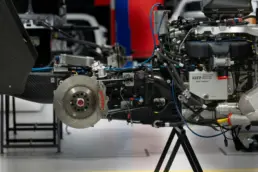
300 tons of complex waste recycled: a success story from an Interzero client
The initial challenge
An automotive component manufacturer needed a sustainable solution for treating waste from vehicle lighting components and lamps. Because metals and electronic components were permanently bonded with different plastics, defective components and production waste were difficult to separate and treat.
Our solution
We implemented comprehensive waste management services at the plant and directed the flow of mixed plastic components, identified by the code EER 07 02 13, to a more specialized recycling facility. The facility successfully separated the various plastics, metals, and electronic components into homogeneous fractions, which can then be processed using standard technologies.
The result
The manufacturer significantly reduced the costs of managing this fraction and streamlined its operations by entrusting the process organization to a single service provider: Interzero. In just eight months, over 300 tons of defective components and production waste were sent for treatment.
Increased recycling, lower costs and other benefits
- Cost reduction
The separation of mixed waste helped reduce treatment costs at the plant. - Increase in recycling rate
The recovered materials were sent for reuse in other processes. - Easier waste management
The manufacturer has reduced the number and duration of activities related to planning and requesting recalls.
Reuse of waste from the production of laminated glass for the automotive sector
We have developed an innovative circular process for PVB film waste generated during laminated glass production . The waste collected from the customer’s premises is sent to a recycling plant that uses patented technology to transform the film into regenerated material.
The regenerated material is then delivered to an end user, such as a safety footwear manufacturer, who uses it as a raw material in their production process. Closing the material loop reduces PVB waste management costs and can also contribute to environmental communication and brand reputation.
The Interzero solution for PVB waste can be used by companies producing automotive glass, balustrades, interior glazing, and acoustic glass panels.
Protective boots made from PVB production waste: a success story from an Interzero customer
The initial challenge
A manufacturer of laminated glass for the automotive industry wanted to reduce the costs of managing PVB film production waste. Previously, the scraps were used to produce alternative fuel for cement plants, generating high costs for the waste producer.
Our solution
We sent the PVB waste to a specialized recycling plant that uses proprietary technology to transform production scraps into regenerated material. We also identified a recipient, a safety footwear manufacturer, who uses the material in the compound used to produce protective boots. Interzero organized the entire logistics process and handled the collection and treatment activities at the glass production plant.
The result
The automotive glass manufacturer reduced PVB waste management costs by up to 70%. The more sustainable solution also had a positive impact on the reputation of both the glass manufacturer and the safety footwear manufacturer.
The advantages of closing the material loop
- 70% reduction in waste management costs
The glass manufacturer achieved its main goal, significantly reducing operating costs. - A circular economy solution
In line with the regulatory waste hierarchy, which prioritizes recycling over energy recovery. - Positive impact on brand reputation
Linked to greater circularity and the abandonment of energy-intensive waste treatment methods.
Other Interzero environmental services for the automotive sector
Our solutions can be integrated with additional services, from waste management to regulatory support and EPR compliance:
management of production, workshop and process waste flows
ongoing environmental consultancy
environmental audits of production plants
development of customized methods for the treatment and recovery of automotive waste
Management of EPR obligations in 31 European markets: EU-27, United Kingdom, Norway, Serbia and Switzerland
selection and maintenance of balers and other waste compaction equipment
PPWR consultancy services, including packaging audits
FAQ
Our ready-to-implement operational package entrusts collection coordination to Interzero experts. Together with the client, we define the preferred model, with a fixed schedule, call-out requests, or a combination of the two, as well as the communication channels with the dedicated Interzero account manager.
Customer staff simply request or schedule the pickup and deliver the waste to the driver. Interzero coordinates all subsequent activities, contacts with recycling facilities, and waste documentation.
Yes. We provide a comprehensive service for the treatment of automotive manufacturing and process waste, defective product batches, and post-consumer waste, such as used components, tires, batteries, accumulators, and used oil, as well as hazardous waste subject to ADR regulations for transport and RENTRI reporting obligations.
A thorough understanding of secondary raw material markets and the potential for treating and reusing production waste is essential. New waste management processes are developed by a multidisciplinary Interzero team, including environmental consultants, account managers, and regulatory, recycling, and waste management experts. Our client teams identify needs and critical issues in various sectors and share them with the broader group of experts. This allows us to connect waste producers with recipients capable of using the recovered material as input for their own production process.
The formal responsibility required by law remains with the company, but a single provider can handle most operational activities related to waste management, reporting, product-related obligations, audit support, and environmental consulting. This allows the client to rely on a single point of contact and coordinated environmental processes.
Environmental costs can be reduced by choosing more cost-effective and sustainable waste treatment and recovery methods, increasing the recovery of valuable materials, optimizing collection frequency, and periodically reviewing waste management service fees.
EPR compliance costs can be reduced by selecting the most cost-effective compliance system in each market and regularly checking the fees offered by local producer responsibility organizations and recycling facilities.
Managing these activities independently is complex, as it requires continuous monitoring of the environmental services and secondary raw materials markets in numerous countries. Language barriers can also hinder communication with local authorities, environmental reporting, and regulatory monitoring.
For companies operating in multiple countries, centralizing EPR services can generate additional financial and operational savings through economies of scale, reduced administrative costs, and the elimination of separate processes for each market.
Interzero manages the automotive sector’s EPR obligations in European Union markets. Our environmental consultants also support projects aimed at reducing EPR contributions, including packaging ecodesign and reusable packaging systems.
Our experts help organize environmental documentation, waste management processes, and related reporting in compliance with ISO, OEM, and applicable regulations. Auditable processes and specialized support reduce the risk of non-compliance during customer and certification audits.
Implementation is planned to ensure continuity of collections, documentation, and environmental compliance. The transition includes analyzing the current service model, defining an implementation plan, and minimal involvement from the client team.
Discover all the solutions for other sectors:

Contact us


