
Life Cycle Assessment
What is it?
Life Cycle Assessment is an analytical method that evaluates and quantifies the environmental impact of a product, process or service throughout all phases of its life cycle: from the extraction of raw materials to production, from use to end-of-life management.
Not just a simple indicator of environmental responsibility: the LCA, indicated by the European Commission as the best reference framework for evaluating the environmental impacts of products and services , is above all a fundamental tool for all companies that wish to implement sustainability strategies, helping to enhance their reputation on the market.
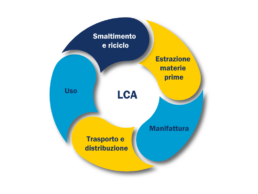
The phases

1. Scope Definition : Clear description of the boundaries of the service or product, including all activities and processes involved.
2. Life cycle inventory : collection of information of environmental relevance relating to the life cycle of the product or service (e.g. energy and water consumption, etc.)
3. Life cycle impact assessment : analysis of collected data and quantification of environmental impacts associated with the product or service, such as CO2 emissions, energy demand and water footprint .
4. Interpretation of results : identification of critical areas where it is possible to reduce the environmental impact and improve the efficiency of the service.
5. Implementation of solutions : development and application of strategies to reduce environmental impact, such as adopting more efficient technologies, training staff, or modifying operational processes.
Interzero Support
Life Cycle Assessment is a fundamental piece in the set of corporate sustainability strategies and is a useful tool in all sectors, from manufacturing to the food industry: Interzero provides its experience in the field and guides companies in the transition towards sustainable business models.
Contatti

