
Businesses and the circular economy: an in-depth look
Commitment to sustainable development is not only a moral responsibility, but also a fundamental strategy for the long-term success of companies. In the era of the climate crisis and growing customer and investor expectations, companies must take concrete measures to reduce their environmental impact. The transition to a circular economy is a priority, offering numerous benefits for companies, including cost reduction, improved reputation, and accelerated innovation.
Did you know that...
… most companies want to implement sustainability initiatives or have already started doing so? This statement was shared by 71.1% to 84.9% of executives at medium-sized and large companies in six different European countries.
Increased public awareness of lifestyles and consumption patterns is leading businesses, institutions, and public authorities to recognize the need for an inevitable change in strategy and direction.
ONLY 4% OF COMPANIES WILL NOT INVEST IN SUSTAINABILITY
Over 4 out of 10 companies (41.8% of the managers involved in the Interzero research) will invest up to 150 thousand euros in sustainability in the next 3 years (23.9% up to 50 thousand and 17.9% up to 150 thousand). More than half (53.9%) will spend more than 150 thousand euros and over 2 in 10 (24%) more than 500 thousand euros.
What drives companies to implement sustainable solutions?
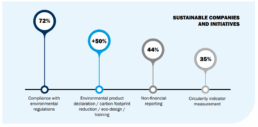
The opportunity to increase process efficiency is the primary driver driving companies to implement sustainable initiatives. Communication and reputational considerations with stakeholders follow. Taking these motivations into account, the next part of the analysis focused on a group of companies selected based on the type of sustainable initiatives they undertake. To this end, an in-depth analysis was conducted, which highlighted that the most common practice is verifying the environmental compliance of their operations (72% of companies).
How to minimize the negative impact on the environment?
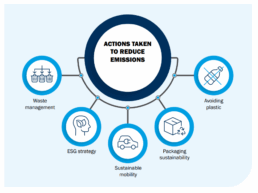
Reducing the environmental impact of a company’s operations represents a valuable competitive advantage. Among the actions taken to achieve this goal, survey participants most frequently cited: reducing emissions, optimizing waste management, eliminating plastic, eco-designing packaging, and developing an effective ESG strategy.
Interzero's research: state of the art, needs, and trends in the circular economy
Interzero supports companies in the transition to sustainable business models through comprehensive consulting and innovative environmental solutions. Our White Paper presents the results of a research study aimed at defining sustainability trends, market expectations, and the related business decisions of medium and large companies in Europe. More than 250 C-level managers in 6 countries were involved: Italy, Austria, Poland, Slovenia, Croatia and Serbia.
The aim of the study is to:
- understand and analyze market trends in the field of the circular economy and sustainable development;
- examine any obstacles to the application of best practices in the individual countries being researched;
- examine the main sustainability needs of medium and large enterprises in the researched countries and analyze their timeliness in adopting sustainable business models;
- To create a basis for the state of development of the ecological transition in business models at the European level by summarizing the data obtained from all the countries analyzed.
Fill out the form to read the report results:
Have questions about the report? Need help defining a sustainability strategy for your company?
Write to us at the email address below!

consulting@interzero.it
