
White Paper insight
Non-financial reporting
To complement the White Paper, we have developed four thematic Insights that highlight the most strategic topics—ESG, packaging, consulting, and non-financial reporting—enhancing key content through data and numbers . Each Insight concludes with a focus on current events , connecting the topics to the latest regulatory developments and market evolutions, offering companies concrete insights for interpreting the context and anticipating change.
Non-financial reporting is increasingly central to corporate ESG strategies and is considered a reputational tool and a means of engaging with the market. Which companies are truly investing in this area? With what priorities, what concrete actions, and over what time horizons? From sustainability reports to the impact of the Omnibus Package , which is rewriting the rules of European reporting: an analysis of trends, the differences between corporate clusters, and the opportunities open to those who know how to turn transparency into a competitive advantage.
The most common action in terms of non-financial reporting is...
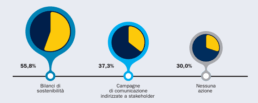
… the preparation of sustainability reports. Excluding the 30% of companies that have not yet initiated any non-financial reporting activity, two main areas of intervention emerge: communication campaigns aimed at stakeholders (37.3%) and, first and foremost, the preparation of sustainability reports (55.8%). This is a clear sign that structured reporting is becoming the preferred response for companies to growing expectations for transparency.
Interzero's research: state of the art, needs, and trends in the circular economy
Interzero supports companies in the transition to sustainable business models through comprehensive consulting and innovative environmental solutions. Our White Paper presents the results of a research study aimed at defining sustainability trends, market expectations, and the related business decisions of medium and large companies in Europe. More than 250 C-level managers in 6 countries were involved: Italy, Austria, Poland, Slovenia, Croatia and Serbia.
The aim of the study is to:
- understand and analyze market trends in the field of the circular economy and sustainable development;
- examine any obstacles to the application of best practices in the individual countries being researched;
- examine the main sustainability needs of medium and large enterprises in the researched countries and analyze their timeliness in adopting sustainable business models;
- To create a basis for the state of development of the ecological transition in business models at the European level by summarizing the data obtained from all the countries analyzed.
Fill out the form to read the full insight:
Do you have questions about the report? Do you need help developing a sustainability strategy for your company?
Write to us at the email address below!

consulting@interzero.it
